
Disable Publishing and Distribution Servers
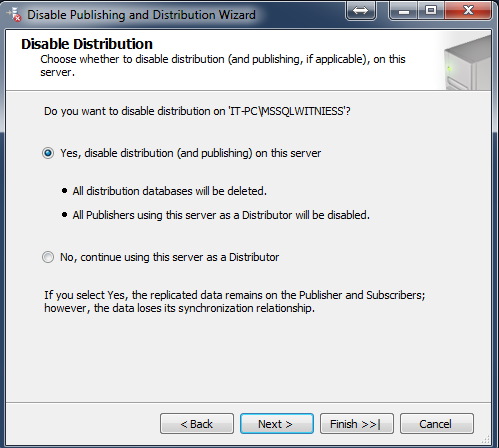
1- Open MSSQL Distribution Server >>> mangment Studio >>> Replication >>> Write Click >>>> Disable Publishing and Distribution

2- Disable this Distribution and Publishing in this Server or Disable the Publishing and let the Distribution
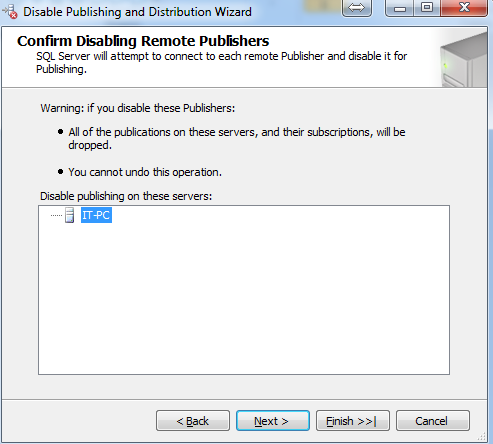
3- Confirm Disabling Remote publisher this step if you add Remote Publisher
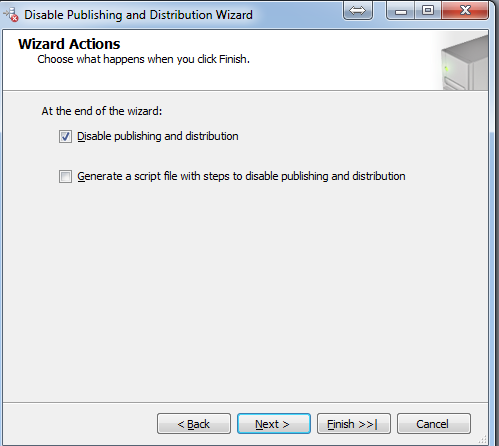
4- Confirm Disable is Wizerd or T-SQL
Now if you Checked the Distrubiter Database under the System Database you will not Found it also if you make write Clikc on Replication you will See Configure Distribution option that’s meaning this server without Distribution

Wait for me in another Replication posts
Regards ,
Mostafa Elmasry
How to Add New Publisher Server to the Distributor Server (MSSQL Replication)
now if i need to Add new Publisher on my Distributor Server i will do this steps in SQL Server Also if you need to know hot to Setup the Cnfiguration of Distributor Server see this link :http://wp.me/p1Oidq-et or Check the replication categories :https://mostafaelmasry.wordpress.com/category/sql-server-2008/replication/
1- Connect to the MSSQL Distributor Server >>> mangement Studio >>> Replication >>> Write Click >>> Distributor properties

2- Add SQL publisher
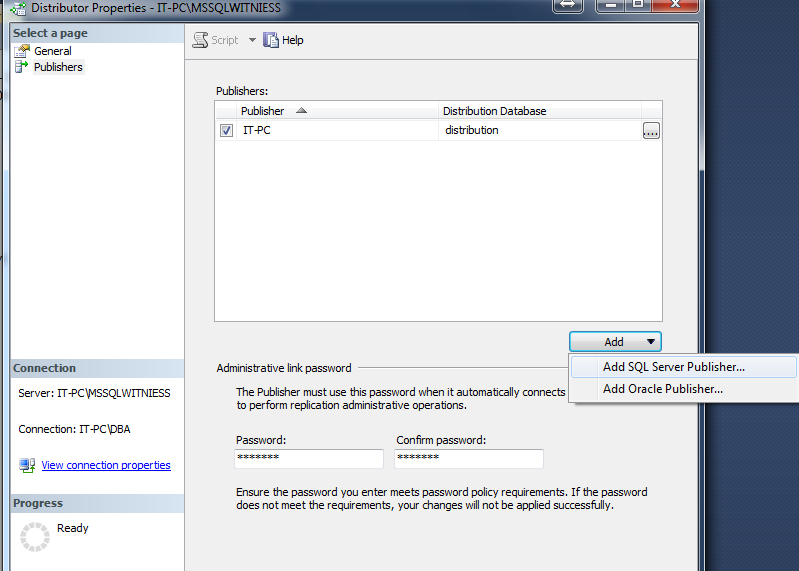
3- Add password to Connect the Publisher with this password to the Distributor
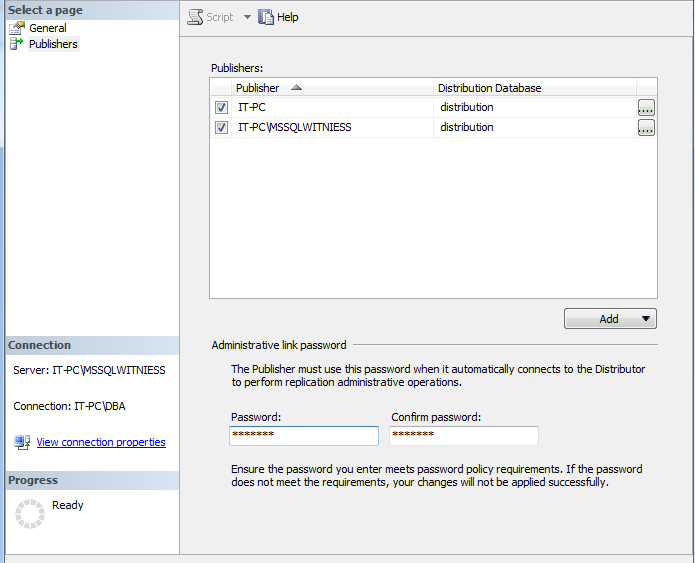
Now if you Check the Distributor Server you will See 2 Publisher Server
Wait for me in another Replication posts
Regards ,
Mostafa Elmasry
Transactional Replication in SQL Server 2008R2
introduction
Today I will Explain How to Configure Replication With Replication type Transactional Replication then in another posts I will exaplain all Replication type and
How to manage the replication ,
how to manage the Replication Agent ,
How to monitor the replication ,
Hot to Check the Replication performance
Transactional Replication
in this Demo I install 2 virtual machine and 3 SQL Server instance
Virtual Machine : SQL-PC (Windows Server 2008R2 Enterprise Edition) With SQL Server (Default instance)
Virtual Machine : SQL2-PC (Windows Server 2008R2 Enterprise Edition) With SQL Server (Default instance , Named Instance = WitnessServer)
I will partition this Subject to three type :
1- How to install the Distribution Server. (SQL-PC)
2- How to install the Publication Server. (SQL-PC)
2- How to install the Subscription Server. (SQL2-PC)
How to install the Distribution Server
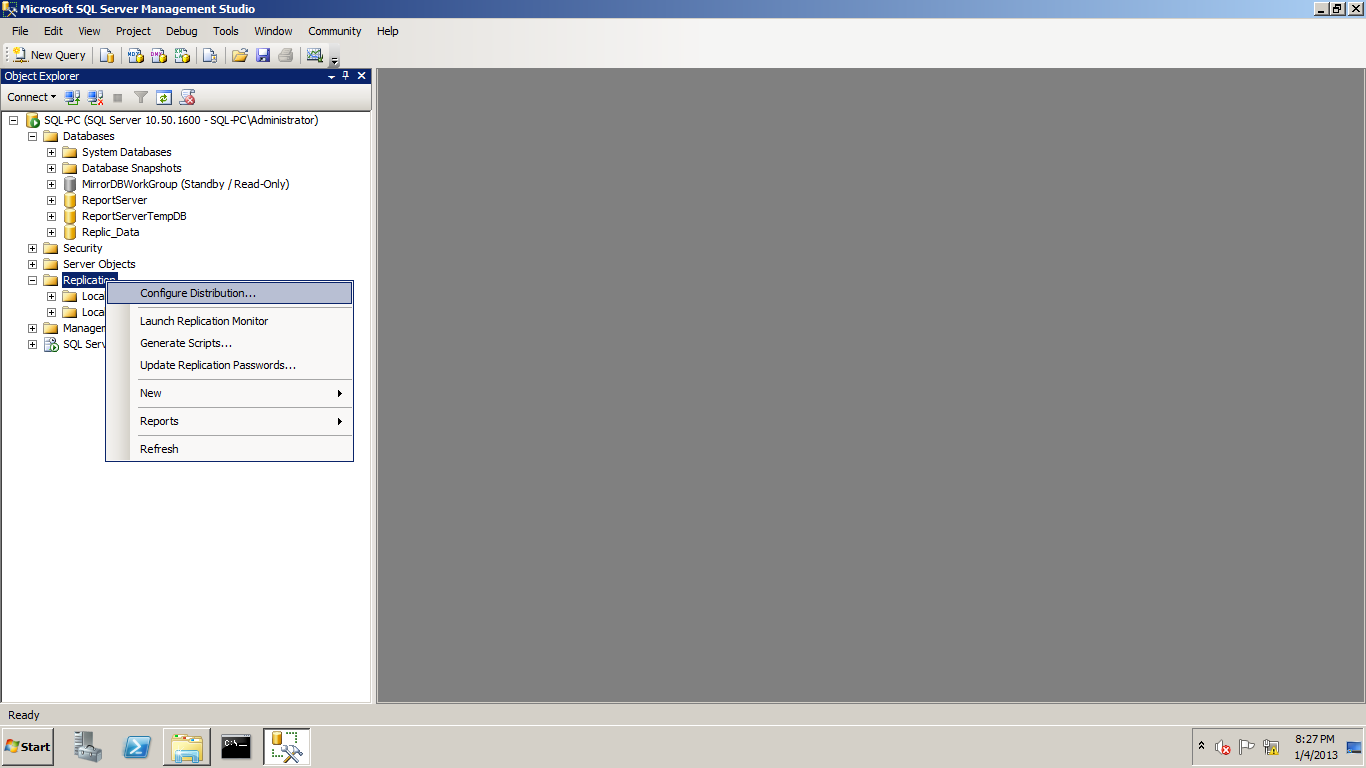
1- on machine Name SQL-PC open SQl Server Instance name SQL-PC Write Click on Replication then Select Configure Distribution
2- Select the Distributor Server : First option if you want SQL-PC is the Distributor Server .Second option if you won’t to Add another Distributor Server .

3- Enter the Snapshot Folder : in this Step Create Folder in make it Share then take the Network path of this Folder and put it in the Snapshot folder path
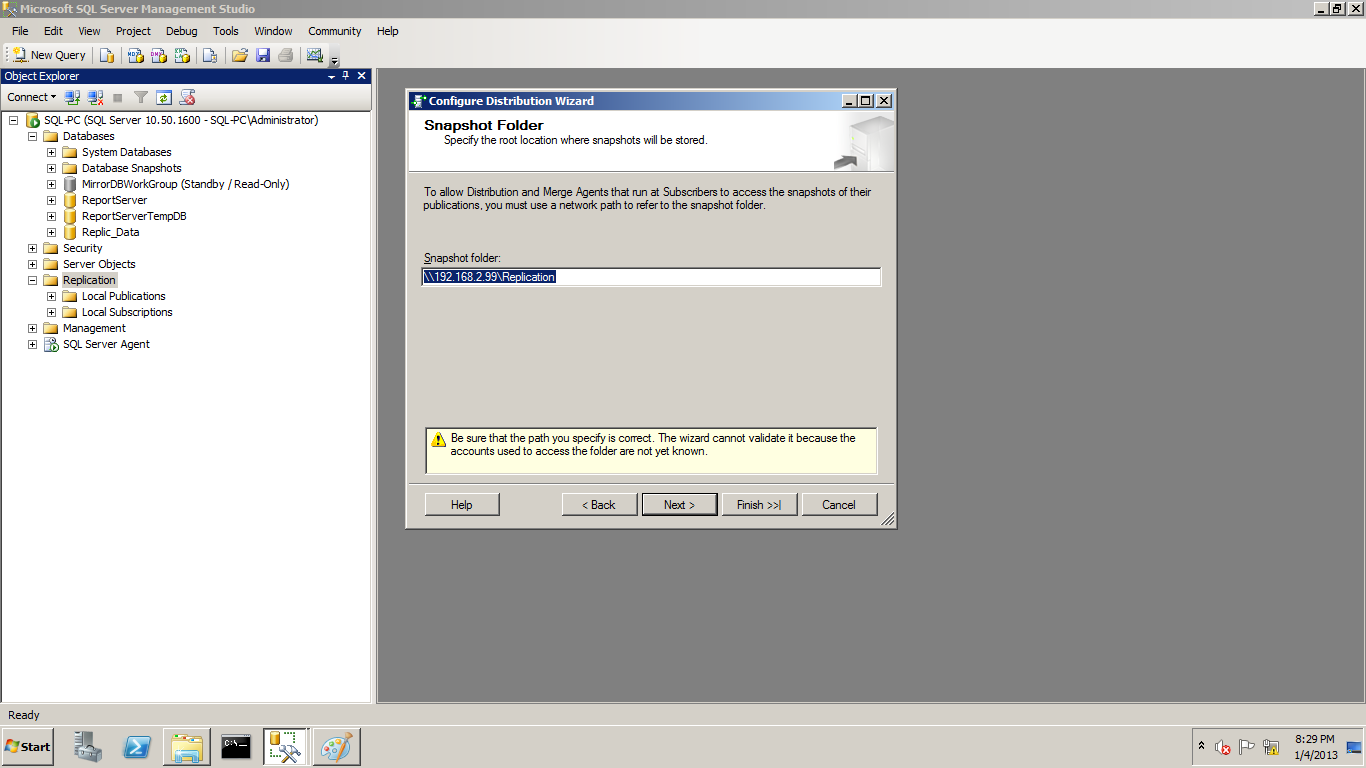
4- Create the distribution Database : this Database will be under the System Database like the master database

5- Select the Publisher Server : in this step you can add more than one Publisher Server but in my demo I will Add SQL-PC is publisher
6- Finish the Configuration by Select between (Configure Wizard & Create T-SQL)

7-Configuration Distribution Complete successfully

8- Check the Distribution Database under the System Database
How to install the Publication Server
1- on machine Name SQL-PC open SQl Server Instance name SQL-PC Under Replication Select Load Publication the Wrote Click on it the Select New Publication
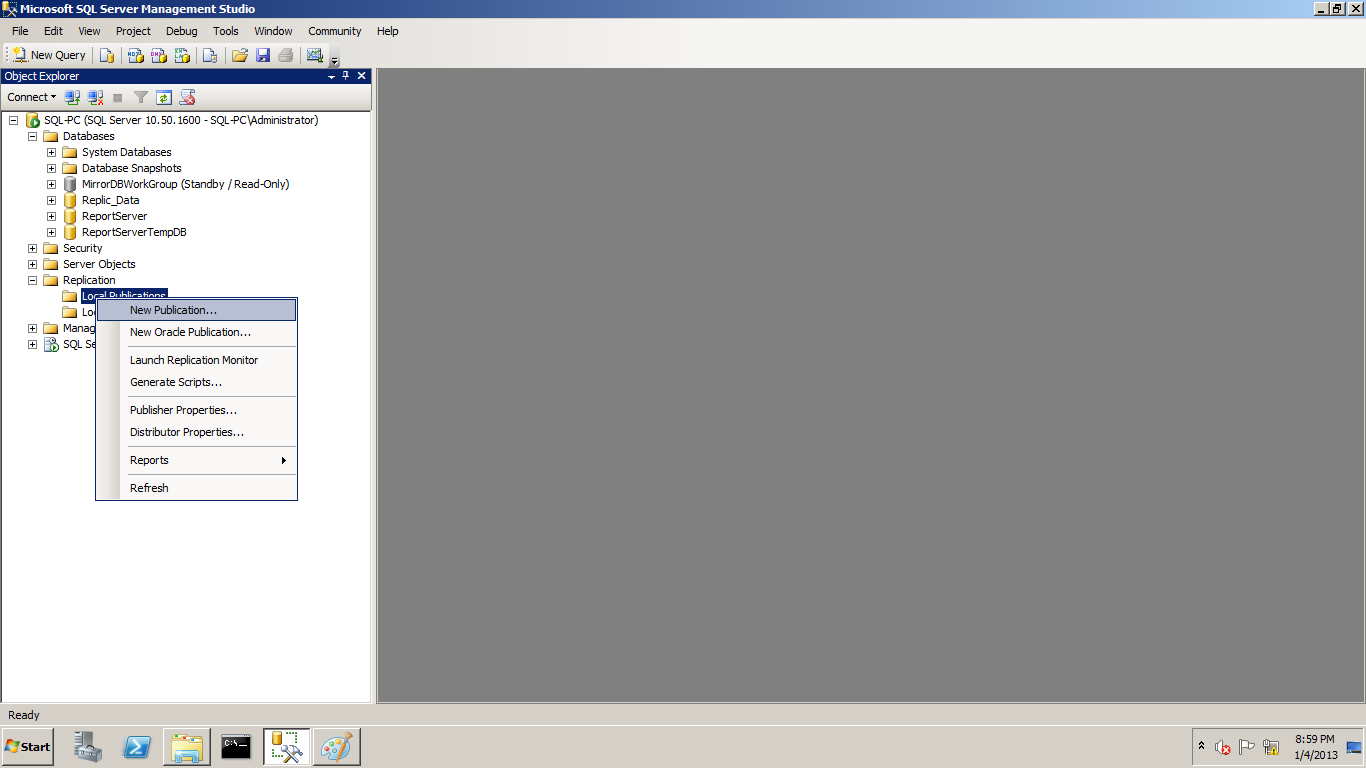
2-ٍSelect the publication Database

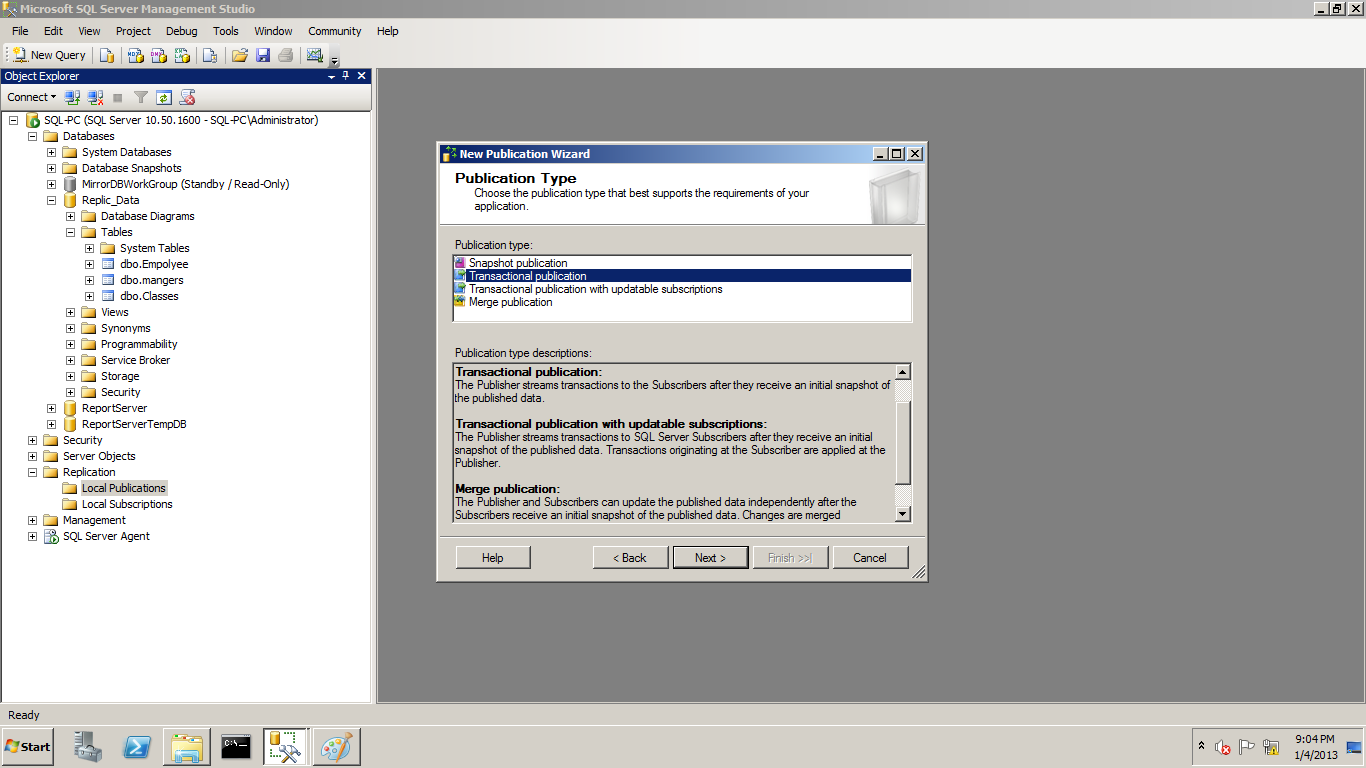
3- Select the Publication Type
4-Select the object to publish it (Table , View , Stored , other objects)
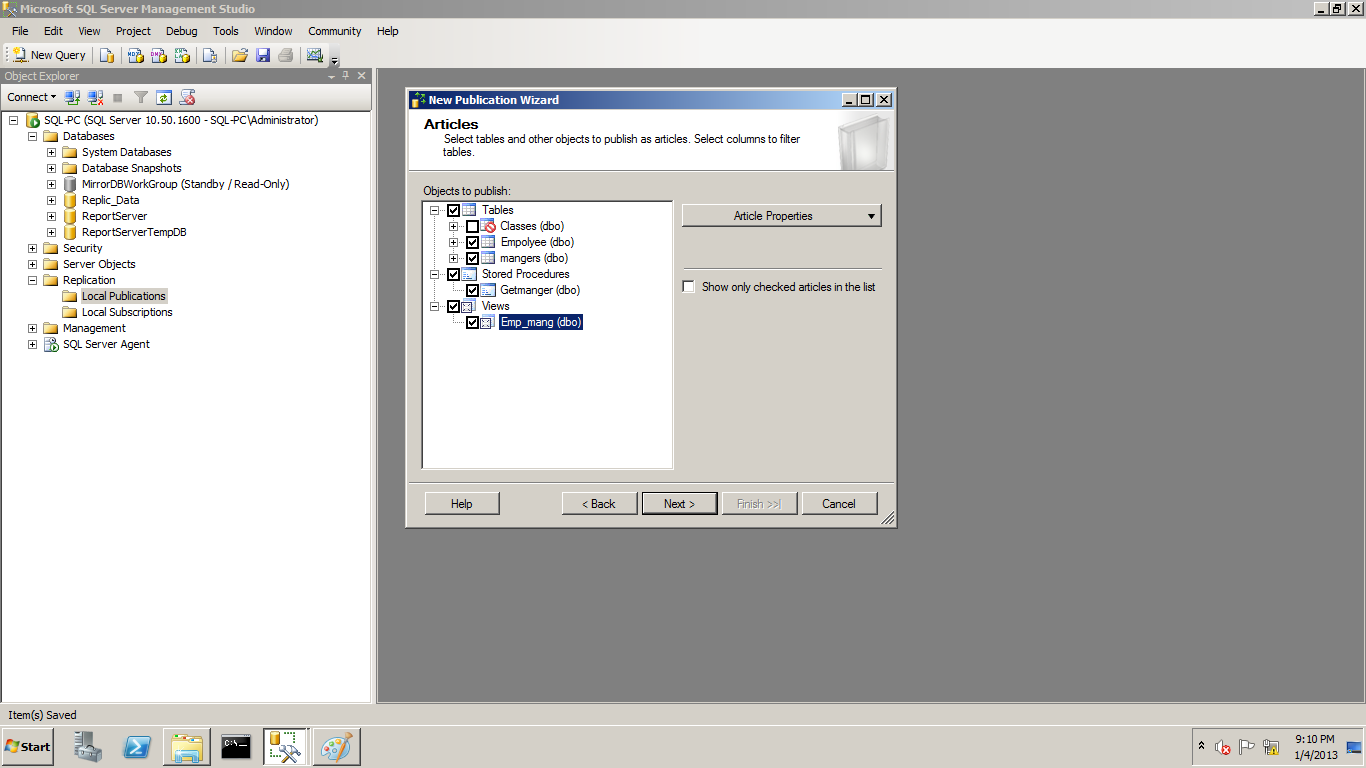
5- if you have table in this table don’t have Primary ley you can’t publish it like this table

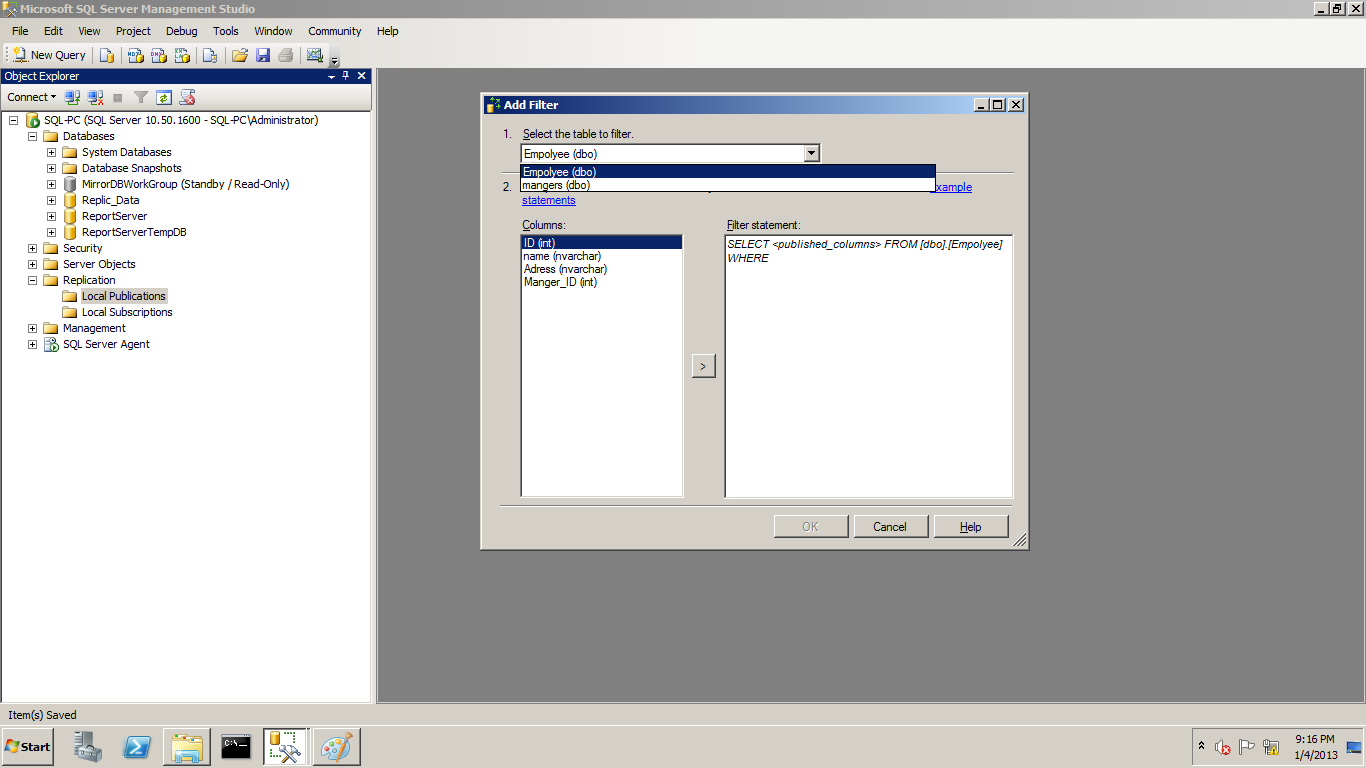
6- if you won’t to add filter on this table

7- Configure the snapshot agent

8- Add the user for the Agent Security


9-Write Name to Publication

10- Check now your new Publication

How to install the Subscription Server
Now let’s to Connect to another Server (SQL2-PC) to install the Subscription on two Instance
- SQL2-PC
- SQL-PC\WitnessServer
1- under Replication Select Load Subscription

2- Selet the Publication Server

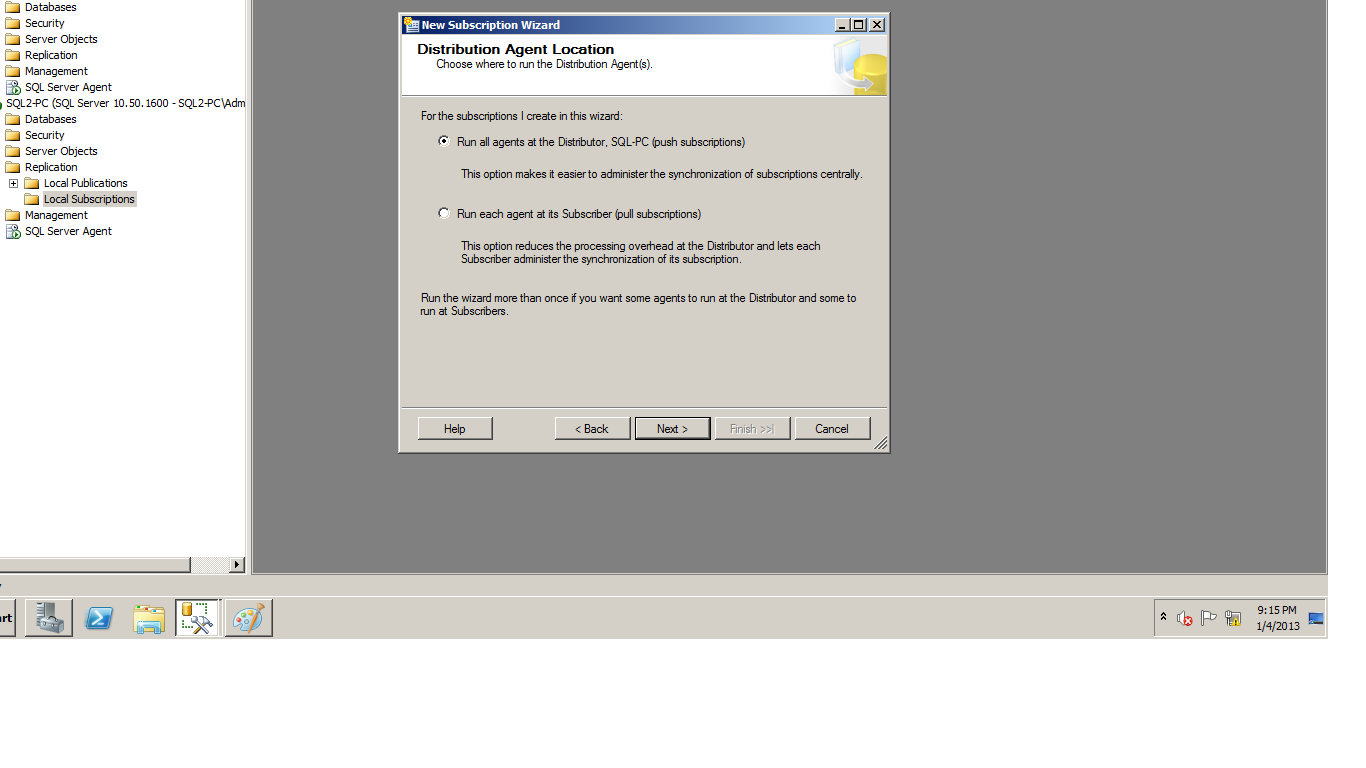
3- Select Server name to run the Agent (run on Distributor Server SQL_PC) or run it on Subscription Server
4- Select the Subscription Server and add the Subscription Database
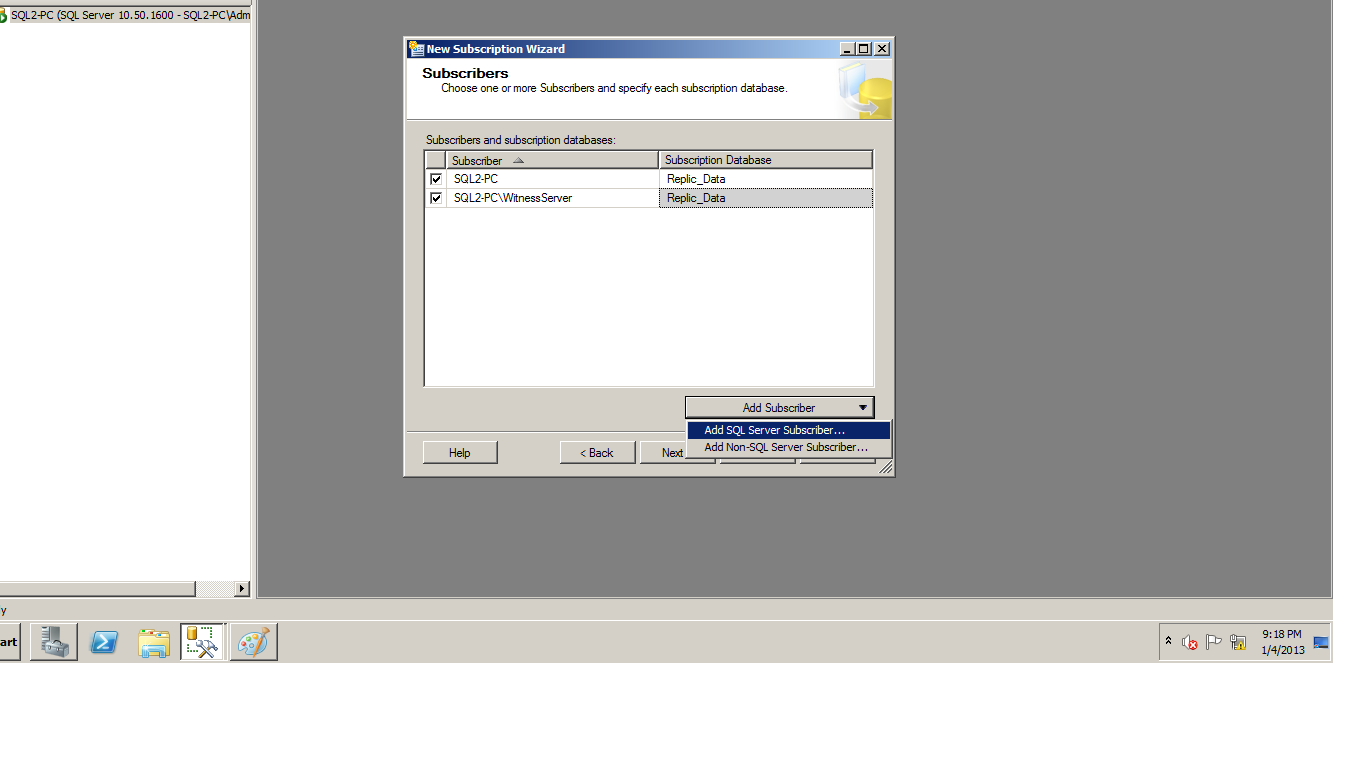
5- Add another Subscription Server (SQL2-PC\WitnessServer

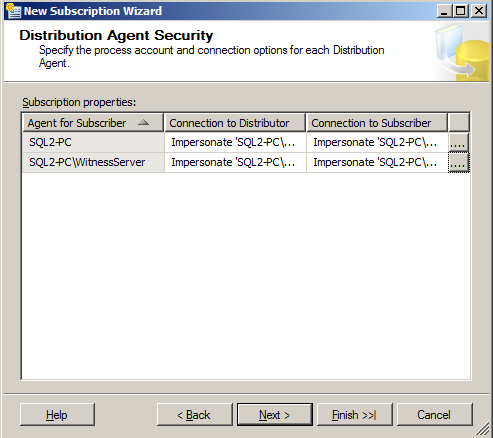
6- Configure the Distribution Agent Secuirty Add the User name Agent
7- Synchronize Schedule

8- ieinitialize Subscription

Now after this step you now finish the Configuration for SQL Server Transaction Replication .
Open SQL Server (SQL-PC) Publication then try to Edit any data in the Publication Database in table or View or Stored we Selected it on the Article and go to the Subscription Servers to Check this Data is transferred or no
Wait for me in another Replication posts
Regards ,
Mostafa Elmasry
Replication Overview
1- What is SQL Replication?
SQL replication is a technology designed to allow storing identical data in multiple locations. First lets examine why replication may be useful and how it solves common data distribution problems. There are several classical examples in which SQL replication solves business problems. One of the most popular ones is the case when a business has mobile employees, who need to access data from their portable computers while they are away from they office. Another example is when the workforce of a business is distributed around the world and all employees need to access one and the same set of data, but network connectivity has poor quality. In both the above examples using SQL replication is the right thing to do. Replication is used in many other scenarios as well for example as a backup solution, and for offloading database intensive processing like reporting and data mining from main live databases.
2- Types of SQL Replication:
- Snapshot replication
The publisher simply takes a snapshot of the entire replicated database and shares it with the subscribers. Of course, this is a very time and resource-intensive process. For this reason, most administrators don’t use snapshot replication on a recurring basis for databases that change frequently
- Transactional replication
With transactional replication, the replication agent monitors the publisher for changes to the database and transmits those changes to the subscribers. This transmission can take place immediately or on a periodic basis.
- Merge replication
Merge replication, like transactional replication, typically starts with a snapshot of the publication database objects and data. Subsequent data changes and schema modifications made at the Publisher and Subscribers are tracked with triggers. The Subscriber synchronizes with the Publisher when connected to the network and exchanges all rows that have changed between the Publisher and Subscriber since the last time synchronization occurred.
3- Replication Overview
- Publisher
Publisher Is database instance that’ allowed the Replicate data to the Subscribers Databases instances Publisher can sent to one or more Subscriber Database
- Distributor
The Distributor is a database instance that acts as a store for replication specific data associated with one or more Publishers The distribution database stores replication status data, metadata about the publication, and, in some cases, acts as a queue for data moving from the Publisher to the Subscribers
- Subscribers
A Subscriber is a database instance that receives replicated data. A Subscriber can receive data from multiple Publishers and publications. Depending on the type of replication chosen, the Subscriber can also pass data changes back to the Publisher or republish the data to other Subscribers.
- Article
database object that is included in a publication this Publication Contain difference type like (table , View , Stored ).
********************************************************************************************************************************
I hope that this will be useful topic
Regards
Mostafa Elmasry
References
http://technet.microsoft.com/en-us/library/ms151314(v=sql.105).aspx
 DB Cloud TECH